Domain biomasse-to-x.de kaufen?
Wir ziehen mit dem Projekt
biomasse-to-x.de um.
Sind Sie am Kauf der Domain
biomasse-to-x.de interessiert?
domain@kv-gmbh.de · 0541-91531010
Domain biomasse-to-x.de kaufen?
Too long or to long?
The correct phrase is "too long." "Too" is used to indicate excess or an excessive degree, while "to" is used as a preposition or as part of an infinitive verb form. **
Was sind mögliche Fehler beim Verwenden des JavaScript Observers?
Mögliche Fehler beim Verwenden des JavaScript Observers können sein, dass der Observer nicht korrekt initialisiert oder registriert wurde, dass die Callback-Funktionen nicht richtig implementiert wurden oder dass die Beobachtung auf das falsche Objekt oder Ereignis angewendet wurde. Es kann auch zu Fehlern kommen, wenn der Observer nicht ordnungsgemäß entfernt oder deaktiviert wird. **


Ähnliche Suchbegriffe für Participants-or-Observers-in
Top-Angebote
Produkte zum Begriff Participants-or-Observers-in:
-
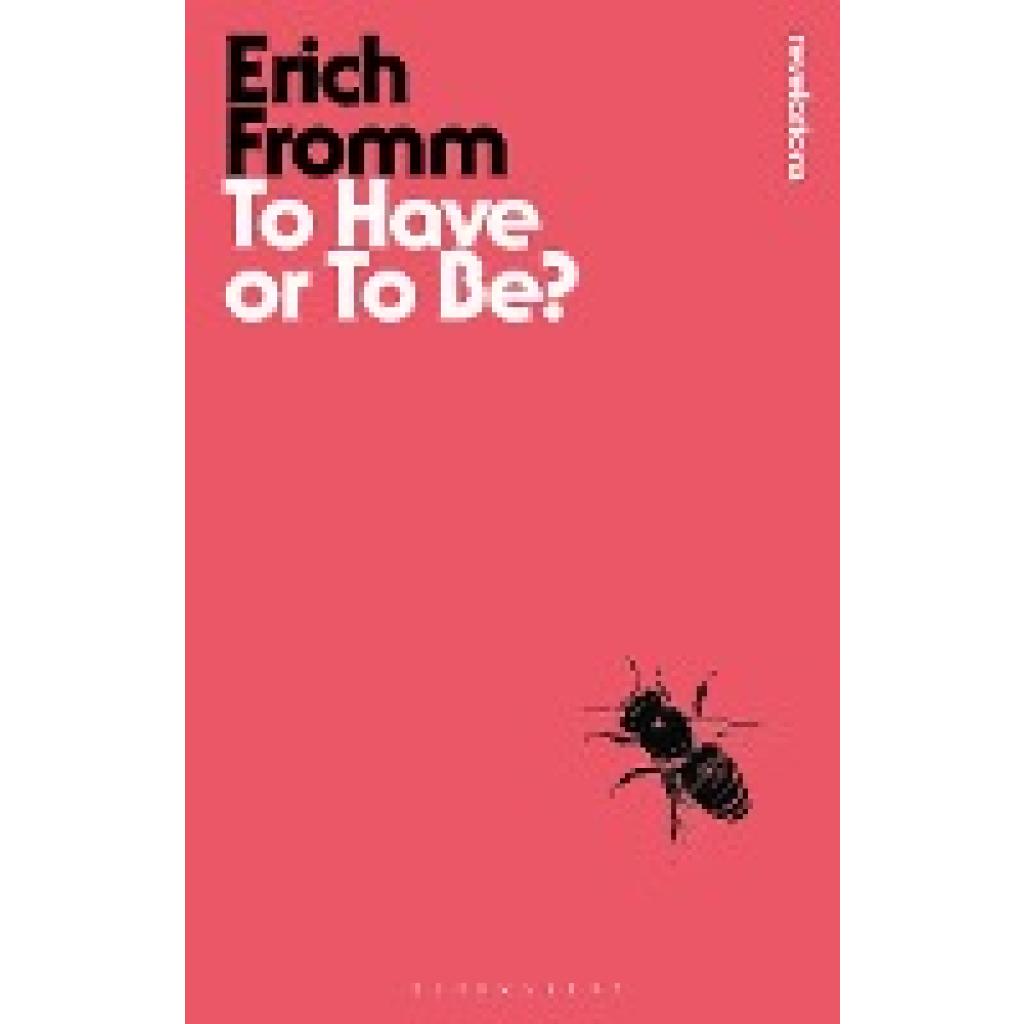
Fromm, Erich: To Have or to Be?To Have or to Be? , To Have Or to Be? is one of the seminal books of the second half of the 20th century. Nothing less than a manifesto for a new social and psychological revolution to save our threatened planet, this book is a summary of the penetrating thought of Eric Fromm. His thesis is that two modes of existence struggle for the spirit of humankind: the having mode, which concentrates on material possessions, power, and aggression, and is the basis of the universal evils of greed, envy, and violence; and the being mode, which is based on love, the pleasure of sharing, and in productive activity. To Have Or to Be? is a brilliant program for socioeconomic change. , > , Erscheinungsjahr: 20130425, Produktform: Kartoniert, Titel der Reihe: Bloomsbury Revelations##, Autoren: Fromm, Erich, Seitenzahl/Blattzahl: 216, Themenüberschrift: PHILOSOPHY / Movements / Humanism~SOCIAL SCIENCE / Sociology / General, Fachschema: Philosophie / 20. Jahrhundert~Englische Bücher / Geisteswissenschaften / Philosophie~Philosophie / 17.-18. Jahrhundert~Humanismus~Soziologie~Literaturtheorie~Sematologie~Semiologie~Zeichenlehre~Semiotik~Zeichentheorie, Fachkategorie: Geschichte~Sozialpsychologie~Humanistische Philosophie~Soziologie~Literaturtheorie~Semiotik und Semiologie, Warengruppe: HC/Philosophie/20./21. Jahrhundert, Fachkategorie: Soziale und politische Philosophie, Text Sprache: eng, UNSPSC: 49019900, Warenverzeichnis für die Außenhandelsstatistik: 49019900, Verlag: Bloomsbury Academic, Verlag: Bloomsbury Academic, Länge: 211, Breite: 132, Höhe: 16, Gewicht: 278, Produktform: Kartoniert, Genre: Importe, Genre: Importe, Herkunftsland: DEUTSCHLAND (DE), Katalog: Gesamtkatalog, Katalog: Internationale Lagertitel, Katalog: internationale Titel, Katalog: Kennzeichnung von Titeln mit einer Relevanz > 30, Katalog: Lagerartikel, Book on Demand, ausgew. Medienartikel, Relevanz: 0040, Tendenz: +1, Unterkatalog: AK, Unterkatalog: Bücher, Unterkatalog: Hardcover, Unterkatalog: Lagerartikel, WolkenId: 189036529,46 €*Versand: 0,00 €Sichere Weiterleitung zum Anbieter


-
Was bedeutet "sein oder nicht sein" oder "to be or not to be"?
"Sein oder nicht sein" ist ein berühmtes Zitat aus Shakespeares Drama "Hamlet". Es stellt die Frage nach dem Sinn des Lebens und ob es besser ist, zu existieren oder nicht. Es reflektiert auch Hamlets innere Konflikte und seine Unsicherheit über das Handeln. **
-
Do or make?
The choice between "do" and "make" depends on the context and the specific action being referred to. "Do" is generally used for activities or actions that involve performing or carrying out something, while "make" is used for creating or producing something tangible. For example, you would say "do your homework" but "make a cake." **
-
Will or gonna?
"Will" and "gonna" are both used to express future actions, but there are slight differences in their usage. "Will" is more formal and is used in more formal situations, while "gonna" is a more informal and colloquial way of expressing future actions. **
-
Do or does?
The choice between "do" and "does" depends on the subject of the sentence. "Do" is used with plural subjects and "does" is used with singular subjects. For example, "They do their homework" and "She does her homework." **

Anyway or anyways?
Both "anyway" and "anyways" are commonly used in spoken English to mean the same thing. However, "anyway" is more widely accepted and considered to be the standard form. "Anyways" is often considered to be more informal or colloquial. **
Go or goes?
The correct form would depend on the subject of the sentence. "Go" is used with the pronouns "I," "you," "we," and "they," while "goes" is used with the pronouns "he," "she," and "it." For example, "I go to the store" and "She goes to the store." **
Top-Angebote
Produkte zum Begriff Participants-or-Observers-in:
-
International Election Observers in Post-Soviet Azerbaijan. Geopolitical Pawns or Agents of Change?, Taschenbuch von Stina Torjesen,Indra Verland,International Election Observers In Post-soviet Azerbaijan. Geopolitical Pawns Or Agents Of Change?, Taschenbuch Von Stina Torjesen,indra Verland, Ibidem, 978-3-89821-743-9, Seitenanzahl: 23033,99 €*Versand: 0,00 €Sichere Weiterleitung zum Anbieter
-
Fromm, Erich: To Have or to Be?To Have or to Be? , To Have Or to Be? is one of the seminal books of the second half of the 20th century. Nothing less than a manifesto for a new social and psychological revolution to save our threatened planet, this book is a summary of the penetrating thought of Eric Fromm. His thesis is that two modes of existence struggle for the spirit of humankind: the having mode, which concentrates on material possessions, power, and aggression, and is the basis of the universal evils of greed, envy, and violence; and the being mode, which is based on love, the pleasure of sharing, and in productive activity. To Have Or to Be? is a brilliant program for socioeconomic change. , > , Erscheinungsjahr: 20130425, Produktform: Kartoniert, Titel der Reihe: Bloomsbury Revelations##, Autoren: Fromm, Erich, Seitenzahl/Blattzahl: 216, Themenüberschrift: PHILOSOPHY / Movements / Humanism~SOCIAL SCIENCE / Sociology / General, Fachschema: Philosophie / 20. Jahrhundert~Englische Bücher / Geisteswissenschaften / Philosophie~Philosophie / 17.-18. Jahrhundert~Humanismus~Soziologie~Literaturtheorie~Sematologie~Semiologie~Zeichenlehre~Semiotik~Zeichentheorie, Fachkategorie: Geschichte~Sozialpsychologie~Humanistische Philosophie~Soziologie~Literaturtheorie~Semiotik und Semiologie, Warengruppe: HC/Philosophie/20./21. Jahrhundert, Fachkategorie: Soziale und politische Philosophie, Text Sprache: eng, UNSPSC: 49019900, Warenverzeichnis für die Außenhandelsstatistik: 49019900, Verlag: Bloomsbury Academic, Verlag: Bloomsbury Academic, Länge: 211, Breite: 132, Höhe: 16, Gewicht: 278, Produktform: Kartoniert, Genre: Importe, Genre: Importe, Herkunftsland: DEUTSCHLAND (DE), Katalog: Gesamtkatalog, Katalog: Internationale Lagertitel, Katalog: internationale Titel, Katalog: Kennzeichnung von Titeln mit einer Relevanz > 30, Katalog: Lagerartikel, Book on Demand, ausgew. Medienartikel, Relevanz: 0040, Tendenz: +1, Unterkatalog: AK, Unterkatalog: Bücher, Unterkatalog: Hardcover, Unterkatalog: Lagerartikel, WolkenId: 189036529,46 €*Versand: 0,00 €Sichere Weiterleitung zum Anbieter
-
Too long or to long?
The correct phrase is "too long." "Too" is used to indicate excess or an excessive degree, while "to" is used as a preposition or as part of an infinitive verb form. **
-
Was sind mögliche Fehler beim Verwenden des JavaScript Observers?
Mögliche Fehler beim Verwenden des JavaScript Observers können sein, dass der Observer nicht korrekt initialisiert oder registriert wurde, dass die Callback-Funktionen nicht richtig implementiert wurden oder dass die Beobachtung auf das falsche Objekt oder Ereignis angewendet wurde. Es kann auch zu Fehlern kommen, wenn der Observer nicht ordnungsgemäß entfernt oder deaktiviert wird. **
-
Was bedeutet "sein oder nicht sein" oder "to be or not to be"?
"Sein oder nicht sein" ist ein berühmtes Zitat aus Shakespeares Drama "Hamlet". Es stellt die Frage nach dem Sinn des Lebens und ob es besser ist, zu existieren oder nicht. Es reflektiert auch Hamlets innere Konflikte und seine Unsicherheit über das Handeln. **
-
Do or make?
The choice between "do" and "make" depends on the context and the specific action being referred to. "Do" is generally used for activities or actions that involve performing or carrying out something, while "make" is used for creating or producing something tangible. For example, you would say "do your homework" but "make a cake." **
Ähnliche Suchbegriffe für Participants-or-Observers-in
-
Will or gonna?
"Will" and "gonna" are both used to express future actions, but there are slight differences in their usage. "Will" is more formal and is used in more formal situations, while "gonna" is a more informal and colloquial way of expressing future actions. **
-
Do or does?
The choice between "do" and "does" depends on the subject of the sentence. "Do" is used with plural subjects and "does" is used with singular subjects. For example, "They do their homework" and "She does her homework." **
-
Anyway or anyways?
Both "anyway" and "anyways" are commonly used in spoken English to mean the same thing. However, "anyway" is more widely accepted and considered to be the standard form. "Anyways" is often considered to be more informal or colloquial. **
-
Go or goes?
The correct form would depend on the subject of the sentence. "Go" is used with the pronouns "I," "you," "we," and "they," while "goes" is used with the pronouns "he," "she," and "it." For example, "I go to the store" and "She goes to the store." **
* Alle Preise verstehen sich inklusive der gesetzlichen Mehrwertsteuer und ggf. zuzüglich Versandkosten. Die Angebotsinformationen basieren auf den Angaben des jeweiligen Shops und werden über automatisierte Prozesse aktualisiert. Eine Aktualisierung in Echtzeit findet nicht statt, so dass es im Einzelfall zu Abweichungen kommen kann. ** Hinweis: Teile dieses Inhalts wurden von KI erstellt.